Usefulness of the article: Following two articles published in April 2020 and January 2021 on the crisis in Lebanon, this article highlights the continuing deterioration of the economic situation.
Summary
- Lebanon is now considered by the Food and Agriculture Organization of the United Nations to be a country threatened by famine.
- Despite the formation of a new government in September 2021, the outlook remains bleak amid hyperinflation.
- The fuel crisis is paralyzing all sectors, especially since subsidies were lifted in August 2021.
- While gold reserves have been preserved until now, this strategy could be continued.

Lebanon finally appointed Najib Mikati, the former prime minister, as the new prime minister on July 26, 2021. A new government was formed on September 10, 2021. This government is supposed to tackle the multiple crises that have been affecting Lebanon since October 2019: hyperinflation, a devaluation of nearly 92% of the Lebanese pound on the parallel market against the USD( see chart below), worsening poverty, etc.

Plagued by endemic corruption for several years[2], the government’s ability to perform its functions over the long term, while restoring confidence among the population and the international community, remains a key challenge for the country. Will it be able to manage this crisis and the funds/aid that could be received from global organizations?
At the end of September 2021, President Michel Aoun asked Lazard Consulting to resume negotiations with the International Monetary Fund (IMF), which had recently transferred $1.135 billion to the Ministry of Finance on September 16 as a « special allocation of drawing rights. » This amount represents Lebanon’s share for 2021, and its value is $860 million, in addition to $275 million for 2009.
This article illustrates the latest developments in the crisis and their consequences, including the fuel crisis, inflation, the depletion of foreign exchange reserves, and the ability of depositors to access the foreign currency amounts they hold in their bank deposits.
1. Fuel crisis
Foreign exchange reserves are drying up, prompting the government to officially announce the gradual lifting of fuel subsidies in July 2021. This decision sparked a wave of panic, with people flocking to gas stations for fear of a massive price increase. As a result, fuel prices in Lebanon have tripled in just two months as the country collapses economically in a crisis classified by the World Bank as one of the worst in the world since 1850.
Previously, the Bank of Lebanon supported fuel imports by providing 85% of the total import cost at the official exchange rate, while importers paid the difference at the black market exchange rate.
The General Petroleum Directorate recently reported that the price of 98 octane gasoline rose by +67% from LBP 77,500 to LBP 133,200, and that of 95 octane gasoline from LBP 79,700 to LBP 129,000. Meanwhile, the price of a domestic gas cylinder has risen by 50% in one year, from LBP 58,500 to LBP 90,400, and the price of diesel fuel has risen by 73%, from LBP 58,500 to LBP 101,500.
In recent months, the capacity of the national electricity company, Électricité du Liban, to supply electricity to all regions has declined, leading to an increase in rationing hours to more than 22 hours per day. Private producers are no longer able to obtain the fuel needed to cover the hours of power cuts, forcing them to ration and significantly increase their rates due to the purchase of diesel on the black market.
Naturally, the fuel crisis has affected all sectors: hospitals, bakeries, food supplies, etc.
On September 8, 2021, Jordan, Egypt, Syria, and Lebanon signed an agreement to supply Egyptian natural gas to Lebanon via Jordan and Syria. The supply of Egyptian gas to Lebanon had been suspended for 10 years. Lebanon needs 650 million cubic meters of gas per year to generate 450 megawatts of energy.
In July 2021, according to the Food and Agriculture Organization (FAO) and the World Food Programme (WFP), Lebanon joined Yemen, Syria, and Somalia on the list of countries where citizens are threatened by food insecurity and famine. This is the result of an agricultural and agri-food sector that is extremely dependent on imports and is no longer able to obtain supplies due to depleted foreign exchange reserves and hyperinflation, which is itself fueled by rising global commodity prices.
Inflation persists in Lebanon (see chart below) and is still very much felt when shopping in supermarkets, even for basic necessities. The majority of Lebanese receive their salaries in local currency, which has lost more than 90 percent of its value against the dollar, while around 80 percent of the population lives below the poverty line, according to the United Nations.

To get a more concrete idea of the daily life of Lebanese citizens, according to Al-Jazeera, a Lebanese consumer at the supermarket was able to buy a basket of essential goods consisting of chicken, essential vegetables, oranges, rice, and milk in 2019 with a budget of LBP 10,290 (USD 6.86). With almost the same amount in 2020, their basket was reduced to milk, tomatoes, and oranges. Finally, in 2021, LBP 15,000 (85 cents) will only buy them one liter of milk.
Table showing the evolution of the Lebanese consumer basket

(source: Lebanese supermarkets, Aljazeera)
2. Foreign exchange reserves
At the end of September 2021, the Bank of Lebanon had USD 18.8 billion in foreign exchange reserves, down 52% from 2019.

Source: BDL, BLOMInvest
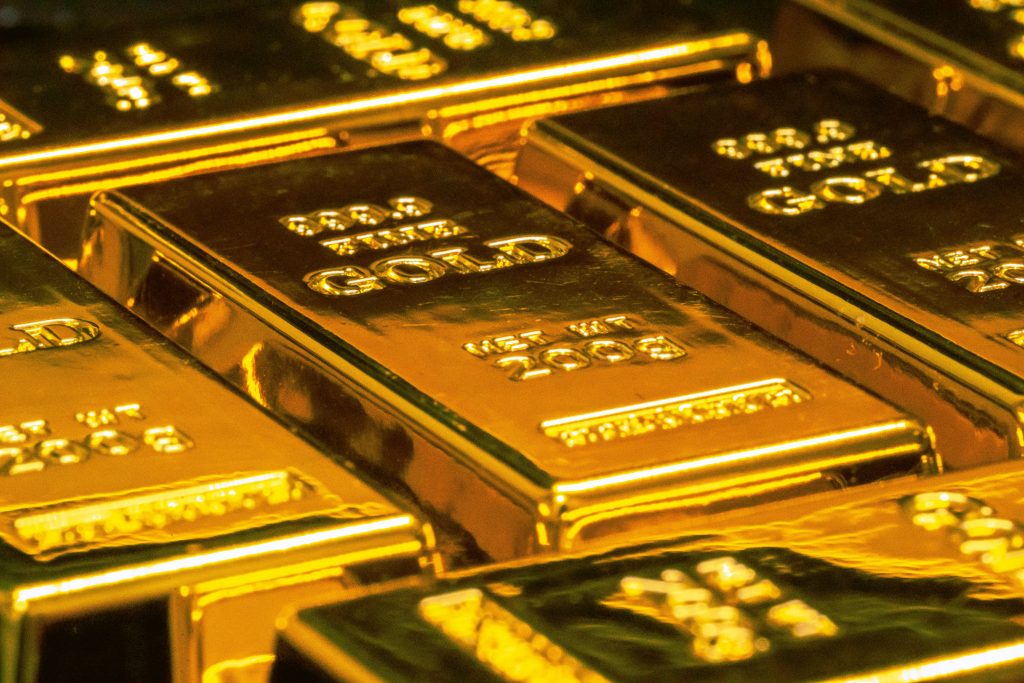
In the first quarter of 2021, Lebanon had the second largest gold reserves in the Arab world after Saudi Arabia, totaling 286.8 tons (43.3% of foreign exchange reserves) according to the World Gold Council, which is equivalent to USD 15 billion, and globally, Lebanon ranks20th. According to the media outlet An-Nahar, one-third of Lebanon’s gold reserves are located at Fort Knox Castle in the United States, while thousands of gold bars are stored underground in steel vaults at the Bank of Lebanon.
The worsening crisis, especially after the lifting of subsidies, raises the following question: how can these gold reserves be used? Would it be possible/useful to sell part of them in the current situation, or should they be preserved to deal with even more extreme situations? (Given that Lebanon has not touched its gold reserves since the beginning of the crisis)
A few points to note in answering this question:
- First, selling part of Lebanon’s gold reserves would not solve the crisis, but merely postpone it. From an accounting perspective, this would serve no purpose; it would merely be a costly substitution of gold for foreign currency. Such an operation may be useful in the short term to address a foreign currency liquidity crisis, by meeting the financing needs related to the current account deficit and providing foreign currency liquidity to import goods.
- As there is no credit risk on gold, it often represents a safe haven in times of financial crisis, which leads to an increase in its price. For a country in financial difficulty, having a gold reserve is a last line of defense against the definitive collapse of the central bank’s assets.
It would seem that this gold reserve should only be used as a last resort and with caution, so as not to lose one of the last assets available to the country to save itself from an even worse situation.
3. Foreign currency bank deposits
As a reminder, since the end of October 2020, the Banque du Liban has prohibited Lebanese depositors from withdrawing any amount from their foreign currency bank deposits. This decision was taken without an official decree. Why? Because there were no more dollars on the market and nothing left to withdraw, as a result of financial engineering (see theApril 2020 articlefor more details on this system).
With a view to lifting fuel subsidies and in order to alleviate the liquidity crisis, in June 2021, the Banque du Liban issued a decision requiring banks to start paying depositors $400 per month, in addition to the equivalent in Lebanese pounds for accounts that existed in October 2019, as they stood in March 2021.
This $400 can be withdrawn in Lebanese pounds per month based on the price set on the electronic platform (Sayrafa), 50% of which is granted in cash and the rest by bank card, for a renewable period of one month. It should be noted that the total amount that can be withdrawn from all banks in Lebanese pounds cannot exceed $4,800.
References
Lebanon forms new government in effort to slow nation’s collapse – UPI.com
Subsidies in Lebanon: Central Bank passes the buck to Parliament – France 24
Egypt to supply Lebanon with natural gas (energies-media.com)
[1] As of October 22, the US dollar (USD) was worth 20,150 LBP on the parallel market according to lirarate, compared to an official exchange rate of 1,500 LBP/USD (a rate applied only to a very limited number of transactions).
[2] The country is ranked149th out of 179 in Transparency International’s 2020 Corruption Perceptions Index, making it one of the worst countries in the world.