Summary:
– Women’s participation in the labor market remains significantly lower than that of men, and is accompanied by notable differences in pay.
– There is a consensus among economists that promoting gender equality, and more specifically the economic empowerment of women, is conducive to growth and development.
– The implementation of gender policies or policies promoting gender equality is a source of development. But under what conditions are these policies effective?
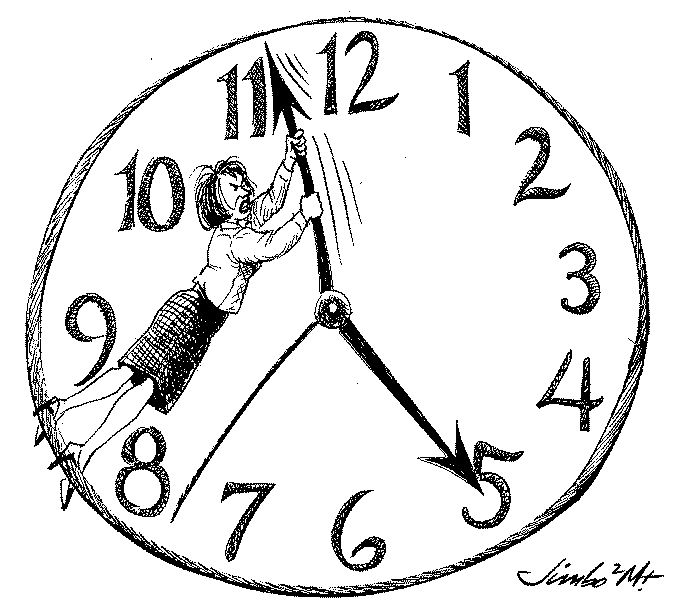
The role of women in development and growth continues to be a central topic in the economic policy debate. This is evidenced by the IMF’s publication in September 2013 of a study entitled « Women’s Employment and the Economy: The Macroeconomic Benefits of Gender Equality. » This study reminds us that, while women make up more than half of the world’s population, their contribution to economic activity and growth is well below their potential.
Indeed, women’s participation in the labor market (in the formal sector) remains lower than that of men, with significant differences in terms of remuneration. Yet the economic empowerment of women is an essential condition for sustainable development, understood as development that meets the needs of current generations without compromising the ability of future generations to meet their own needs.
By removing the barriers that prevent women from accessing the same economic opportunities as men, gender or parity policies can improve economic performance and development outcomes. But beyond theory, under what conditions does a gender equality policy promote development?
Time allocation, a source of economic disparities between men and women
An initial answer is provided in the World Bank’s « World Development Report 2012. « The authors point out that gender disparities in productivity and earnings are partly due to differences in how men and women allocate their time, which is the result of deeply entrenched social norms.
The work of economists Pierre-Richard Agénor and Otaviano Canuto is also based on this central hypothesis. For them, the difference in how men and women allocate their time explains the existing disparities. Thus, a gender policy will be effective if a policy aimed at freeing up time in women’s schedules (e.g., infrastructure investment policy) is implemented in parallel.
Women allocate their time between four alternatives: participation in the labor market, raising children, accumulating human capital, and domestic production. However, women devote a considerable amount of their time to domestic activities. A reallocation of time would allow them to devote more time to economic activity, the accumulation of human capital, and childcare, leading to an increase in long-term economic growth.
Interaction between access to infrastructure, women’s time allocation, and growth
The issue of access to infrastructure in the broad sense (transport infrastructure—roads, rail, ports, airports—water and electricity supply, telecommunications) is central to development economics. Indeed, the infrastructure deficit in developing countries is seen as an obstacle to growth and poverty reduction. Investing in infrastructure should therefore stimulate economic activity: investing in roads or other logistics infrastructure reduces transport costs, while investing in water and electricity supply infrastructure increases business productivity, lowers production costs and thus increases competitiveness, as well as accumulating human capital (health and education), which is a source of productivity and growth.
The issue of access to infrastructure is essential for Agénor and Canuto. The two economists have therefore developed a « nested generations » model [1], which they have applied to gender disparities, with the aim of measuring the interactions between access to infrastructure, women’s time allocation, and economic growth.
According to their central scenario, infrastructure spending will have a direct positive impact on growth in that it constitutes public investment, a component of demand, and will also produce positive externalities through the reallocation of women’s time (indirect effects). Women will be able to free up more time for economic activity, human capital accumulation, and childcare. The accumulation of additional human capital will increase women’s bargaining power within the household, leading to higher spending on children’s education and health, as women have a lower preference for consumption spending than men and are more inclined to spend on their children.
Thus, the increase in time allocated to childcare will result in improved health in childhood and adulthood. Indeed, there is inter- and intra-generational health, meaning that women’s health affects the health of their children, and health in childhood affects health in adulthood (nested generations model). In addition, increasing the time allocated to childcare will improve children’s learning abilities, thereby increasing their productivity in adulthood and their earning potential. It should be noted that differences in earnings between men and women in the labor market largely depend on disparities experienced in childhood within the household. A policy that reduces disparities between girls and boys within the household will therefore be conducive to long-term growth.
Gender policies and infrastructure investment applied to the Brazilian case
In a study entitled « Gender equality and economic growth in Brazil – a long run analysis, » the two economists applied their model to the Brazilian case and conducted two experiments: an increase in infrastructure investment (in rural roads, the electricity grid, etc.) and a policy to reduce disparities in the labor market through equal pay (gender policy). The country was chosen because, although Brazilian women’s participation in the labor market has increased by more than 15% over the last two decades (to 60%) [2], gender disparities remain high, at 21 percentage points [3]. For example, while the proportion of women in formal employment stood at 48.8% in 2009, the figure for men was 53.2%. In addition, Brazilian women still spend more time than men on domestic activities. In 2008, women spent 25.1 hours per week on household activities, compared with 10 hours for men [4].
If we first consider a policy of increasing government spending on infrastructure investment (spending that is neutral from a budgetary balance perspective, rising from 2.1% to 3.1% of GDP), the experiment shows that such a policy could add between 0.5 and 0.9 percentage points to Brazil’s annual growth rate, taking into account both direct and indirect effects (through the reallocation of women’s time and their new bargaining power within the household).
Now let us suppose that the government introduces a gender policy of the « equal pay for equal work » type, aimed at eradicating gender disparities in the labor market. This policy will have the direct effect of increasing household income and, consequently, the level of savings and private investment, but will also lead to an increase in income tax revenue. This latter effect will thus increase public health spending, thereby improving the health of children and women in adulthood. In quantitative terms, the model proves that this policy could add 0.2 percentage points to the country’s annual growth. In the long term, this policy will have a significant impact on the population’s standard of living.
Conclusion
As the work of Agénor and Canuto shows, by removing the barriers that hinder women’s access to economic opportunities and human capital endowments, policies promoting gender equality lead to better economic performance and improved development outcomes.
Of the 865 million women worldwide who have the potential to contribute significantly to their countries’ economic activity, 812 million live in emerging and developing countries [5] [6], demonstrating the urgency and usefulness of promoting the implementation of gender policies in these countries, motivated by considerations of both equity and economic efficiency.
A wide range of gender equality policies are available to public authorities and have proven their effectiveness, whether it be the implementation of a rural electrification program in South Africa, which has increased women’s participation in the labor market (by saving time on domestic tasks and allowing women to reallocate their time) or the adoption of microfinance programs, as in Brazil, aimed at improving women’s access to credit and increasing their productivity. It is therefore up to the authorities in these countries to choose the policy best suited to their economic and social context.
References
– Agénor and Canuto (2013), « Gender equality and economic growth in Brazil, a long run analysis »
– Aguirre et al. (2012), « Empowering the Third Billion: Women and the World of Work in 2012. »
– Barros et al. (2011), « The impact of access to free childcare on women’s labor market outcomes: evidence from a randomized trial in low-income neighborhoods of Rio de Janeiro. »
– IMF Staff Discussion Note (2013), Women, Work, and the economy: macroeconomic gains from gender equity.
– Luxembourg Income Study Database, Wave VI 2011.
Notes
[1] The nested generations model, attributed to Maurice Allais, Paul Samuelson (1947) and Peter Diamond (1965), is an economic model in which agents live between two and three periods (childhood, adulthood and old age). It provides an understanding of the interactions and transfers of resources between these generations that coexist permanently: children, who accumulate human capital; adults, who work; and retirees, who consume their savings.
[2] Barros et al. (2011), « The impact of access to free childcare on women’s labor market outcomes: evidence from a randomized trial in low-income neighborhoods of Rio de Janeiro. »
[3] Luxembourg Income Study Database, Wave VI 2011.
[4] Agénor and Canuto (2013), « Gender equality and economic growth in Brazil, a long run analysis. »
[5] Aguirre et al. (2012), Empowering the Third Billion: Women and the World of Work in 2012.
[6] Study based on data from the International Labor Organization. According to the authors, women who have the potential to participate in the labor market are those who have received a sufficient level of education (« prepared ») and have sufficient social and political support to enter the labor market (« enabled »).