DISCLAIMER: The opinions expressed by the author are personal and do not reflect those of the institution that employs her.
In December 2022, after more than two years of postponements, the United Nations Conference on Biodiversity (COP15) was held in Montreal. Stemming from the 1992 Convention on Biological Diversity, this Conference of the Parties meets every two years to make progress on the conservation of biodiversity and its sustainable and equitable use. At the end of this COP, a historic agreement was signed. The « Kunming-Montreal Global Biodiversity Framework » is historic because it demonstrates substantial progress compared to previous COPs on biodiversity (higher targets, monitoring mechanisms, etc.), and this in a context that is particularly unfriendly to such progress.
Charlotte Gardes, economist at BSI Economics, answers four questions about the agreement.

-
Why should we be concerned about the collapse of biodiversity?
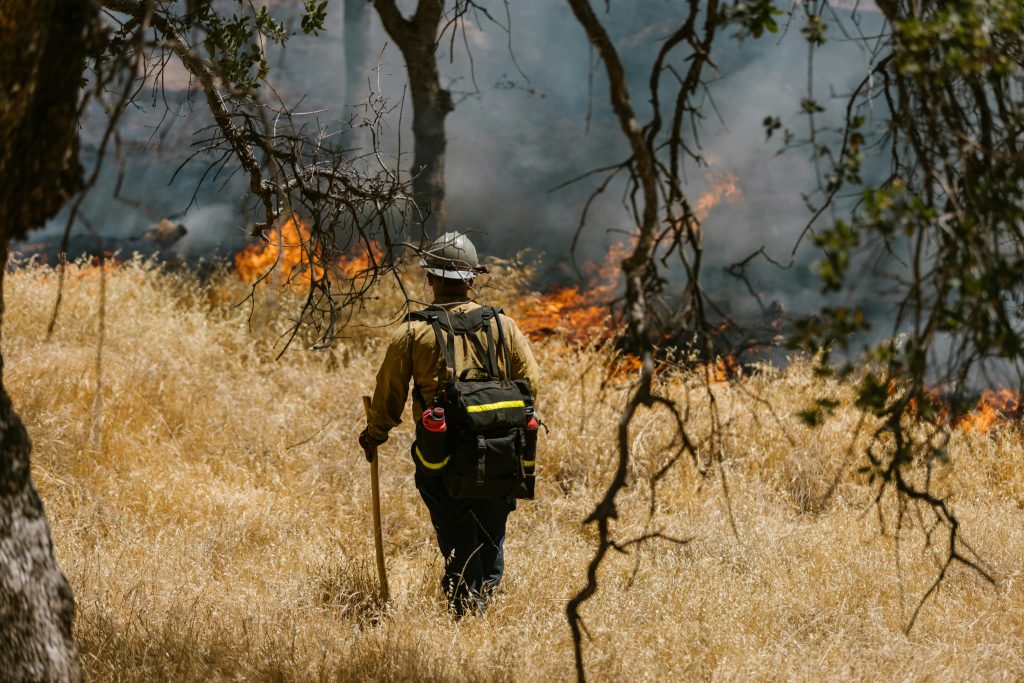
« Nature is essential to human existence and a good quality of life. Most of nature’s contributions to people are not fully replaceable, and some are even irreplaceable. » This was highlighted by IPBES (the equivalent of the IPCC for biodiversity) in its latest assessment report in 2019. While 75% of terrestrial environments and 66% of marine environments have been severely altered by human societies, 1 million animal and plant species (out of approximately 8 million) are threatened with extinction in the coming decades.
Direct and indirect factors contributing to biodiversity loss have intensified over the past 50 years (land use change, overexploitation of living organisms, climate change, pollution, invasive species), causing an unprecedented decline in human history. For example, the IPBES report shows that global trends in nature’s ability to maintain its contributions to a good quality of life, from 1970 to the present, illustrate a decline in 14 of the 18 categories of contributions analyzed (pollination, food and feed, regulation of harmful organisms and biological processes, etc.). The global rate of species extinction is already at least tens to hundreds of times higher than the average rate over the last 10 million years, and the pace has accelerated in recent decades. However, biodiversity—and the ecosystem services itprovides—play an essential role in the functioning of the economy, beyond the agricultural sector alone.
How is this a challenge for financial stability?
Biodiversity loss is an endogenous source of macrofinancial risk. The sources of biodiversity-related risks (both physical—due to biodiversity loss and the degradation of ecosystem services—and those related to the transition to a nature-friendly economy) to financial stability were highlighted in 2022 by the Network for Greening the Financial System ( NGFS), a network of central banks and supervisors for the greening of the financial system (here and here).
Not only can these risks reinforce each other, but the channels of transmission to the economy are diverse and can affect price stability (such as deforestation affecting agricultural yields and hydroelectric production, leading to higher food and electricity prices – as recently documented by the IPCC). The transmission channels to the financial system are varied, involving households, businesses, and governments, and generate credit, market, liquidity, and operational risks.
Furthermore, biodiversity loss and climate change are intrinsically linked, increasing the risks of destabilizing the planetary system (Mace et al. 2014; Dasgupta, 2021) and sources of uncertainty. Ecosystems play a key role in carbon storage and climate regulation, while climate change is a key factor in biodiversity loss, for example through deforestation. Furthermore, the effects of biodiversity collapse are global (exceeding the limits of ecosystem services; collapse of crucial biomes such as the Amazon, with consequences beyond South America’s borders; potential cascading impacts along value chains). Finally, the low substitutability of natural capital means that these risk transmission channels can potentially generate systemic risk.
What does the Kumming-Montreal agreement provide for?
While the so-called Aichi targets from the 2011-2020 plan have not been met (Babin, Leclerc, and Bazile, 2022), theagreement signed in December 2022(the Global Biodiversity Framework) aims to reverse the decline in biodiversity in order to « live in harmony with nature. » It sets four goals for 2050 (integrity and resilience of all ecosystems; sustainable use of biodiversity; equitable sharing of benefits from the use of genetic diversity; measures to bridge the $700 billion investment gap), 23 targets for 2030, and a series of planning, monitoring, and review mechanisms. It should be noted that one section is dedicated to the Sustainable Development Goals (SDGs).
Among these targets for 2030 are achieving 30% global protected areas[2] (terrestrial, marine, coastal, and freshwater areas), restoring at least 30% of degraded areas, and reducing the rate of introduction of invasive species by 50%.
Subsidies harmful to biodiversity(particularly for conventional agriculture) must be reduced by USD 500 billion per year, and funding (public and private) for biodiversity must be mobilized in the order of USD 200 billion per year, managed by the Global Environment Facility. Financing is particularly key for developing countries – which are known as « megadiverse » countries (home to more than 60% of the world’s biodiversity, including endemic species and associated indigenous knowledge). Fifteen of the 17 megadiverse countries are emerging and developing countries (NGFS, 2022). However, the destruction of megadiverse ecosystems such as tropical forests to facilitate the development of global warming mitigation activities (mining, biomass, carbon capture monocultures) could trigger tipping points with disastrous economic consequences in these economies. The collapse of biodiversity can increase credit risk and thus raise the cost of borrowing, which is particularly harmful to developing countries (Finance for Biodiversity Initiative, 2022).
Encouraging companies and financial institutions to assess and disclose their risks, dependencies, and impacts on biodiversity is also a target.
-
What are its limitations?
Beyond the non-binding nature of the agreement (despite a more robust monitoring and review process than the previous 2010 agreement through the analysis of National Biodiversity Strategies and Action Plans (IDDRI, 2023)), several limitations can be highlighted. For companies and financial institutions, despite the key signaling effect, there is no requirement to publish biodiversity impacts and no specific targets for the industries with the most harmful effects (such as industrial agriculture and fishing).
In addition, funding targets remain below those recommended by the scientific community (notably USD 700 billion per year for conservation) (Nature, 2022). Additional criticisms have been made, particularly regarding the 30% protection target for protected areas, which is not sufficiently specified (quality of protected area management—management plans and scientific monitoring; level of protection granted—see IDDRI, 2023); the lack of specific criteria on reducing pesticide use or sustainable resource management in the fisheries, forestry, and agriculture sectors; and the lack of mention of industrial fishing or meat consumption (Carbone 4, 2022).
What now?
There are many challenges, both in terms of the effective implementation of the COP15 agreement’s objectives and the refinement of criteria, based on scientific evidence, through the review by States of their national biodiversity strategies and action plans between now and the next COP in Turkey in 2024. The role of the financial system (central banks and supervisors, international financial institutions, financial institutions), detailed in a recent report by the Forum for Responsible Investment, will be the subject of increased attention with a view to effectively aligning financial flows.
The ongoing work of the NGFS, through the development of a conceptual framework for assessing the risks associated with biodiversity loss and risk analysis scenarios, will bedecisive.
[1]In particular SDG 14 (life below water) and SDG 15 (life on land).
[2]The IUCN (International Union for Conservation of Nature) defines protection as « a clearly defined, recognized, dedicated and managed geographical area, through effective legal or other means, to ensure the long-term conservation of nature and its associated ecosystem services and cultural values » (here). Several management categories are possible (strict nature reserve, wilderness area, national park, protected area for sustainable use of natural resources, etc.), and must apply to at least 75% of the protected area’s surface area. Discussions took place during and after the negotiations on the ambition of the agreement, given the absence of any reference to strict protection and the mention of « sustainable use, » which is open to interpretation. See: A new era for global biodiversity? | IDDRI
[3]Brazil, China, Colombia, Democratic Republic of Congo, Ecuador, India, Indonesia, Madagascar, Malaysia, Mexico, Papua New Guinea, Peru, Philippines, South Africa, Venezuela.