Summary:
– During periods of low economic activity, viable companies face restrictions on access to bank credit, further slowing down the recovery.
– Long-term relationships between banks and businesses mitigate this phenomenon by reducing information asymmetry regarding borrower quality.
– However, they result in higher interest rates, which are only sustainable for companies most exposed to economic risks.
– Macroprudential policies increase banks’ ability to ensure continued access to commercial credit in the event of a crisis.
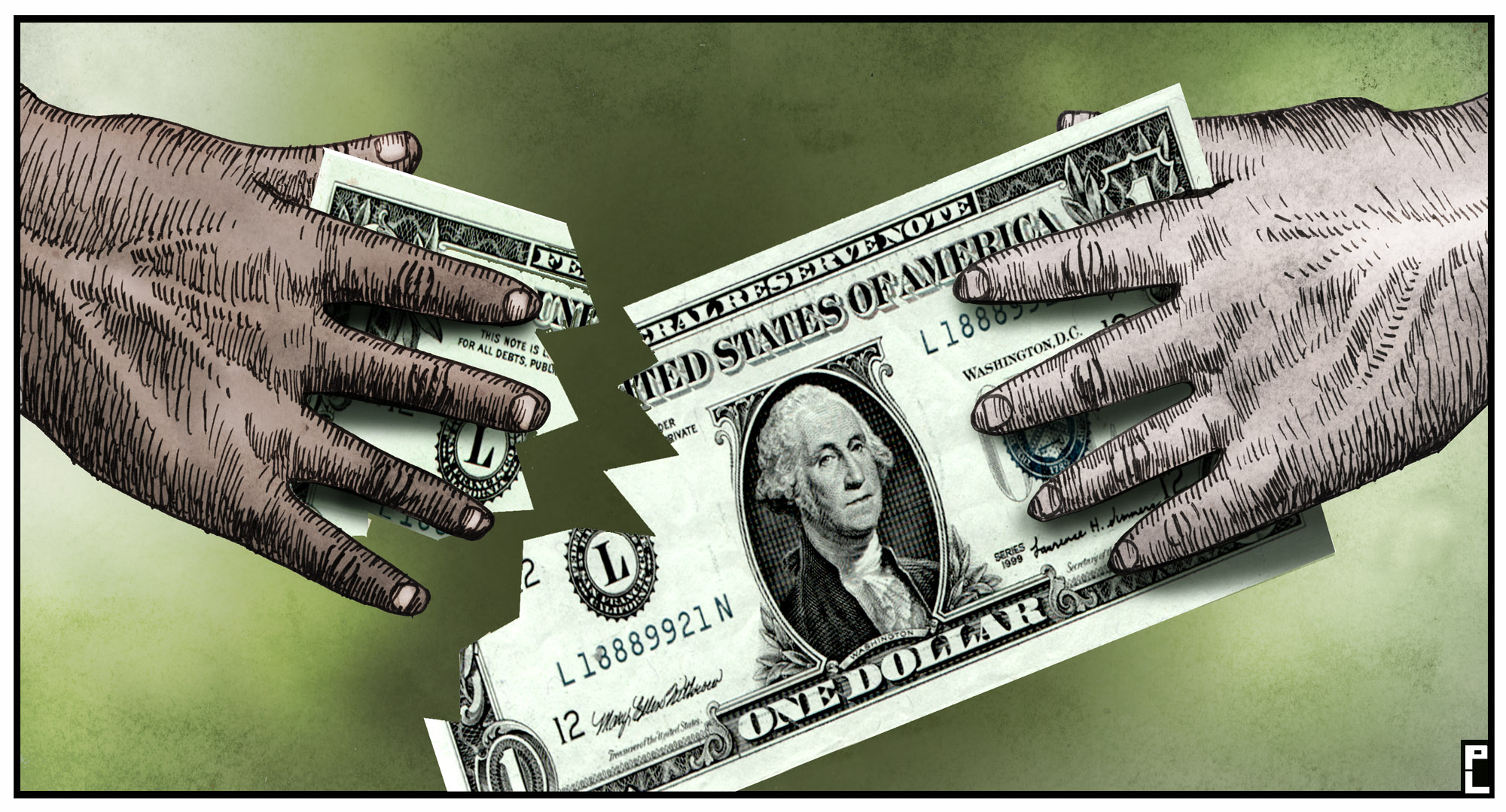
In periods of low economic activity, viable businesses are regularly denied bank loans, even though these loans would have enabled them to expand, invest, and hire more staff. This is known as a « credit crunch. » By restricting access to capital for creditworthy companies, this phenomenon contributes to exacerbating the effects of the financial crisis or delaying economic recovery. While this phenomenon has been known for a long time, it is less well known that the nature of the relationship between banks and companies has a significant impact on its scale. In a research article published last September, Bolton, Freixas, Gambarcota, and Mistrulli (2013) show that the effect of macroeconomic shocks is mitigated when companies borrow more from banks with which they have long-term relationships (relationship lending) than from banks specializing in pure financial transactions (transaction lending). [1]
The heart of the problem: information acquisition
Banks may be reluctant to grant commercial loans, even when they themselves have no problem accessing liquidity. Economic theory traditionally explains this by the fact that it is very difficult to assess a priori the quality of a company as a potential borrower: how profitable can it be expected to be in the future, how motivated or committed are its managers? These are all uncertainties for the bank. The bank can therefore only partially predict the profitability of the loan it would grant, or worse, the risk of not being repaid in the event of the borrower’s bankruptcy. This is even more complicated in times of crisis: it is then necessary to distinguish whether the company approaching the bank is making little profit because the economic climate is generally gloomy, despite the efforts of its managers, or because the latter have undertaken an unprofitable project or have not given themselves the means to carry it out. Ultimately, as Stiglitz and Weiss showed in 1981, it is the presence of « information asymmetry » between the company and the bank that leads the lender (the bank) to « distrust » the borrower (the entrepreneur), and thus to sometimes ration access to credit for viable companies. [2]
It therefore seems quite natural that long-term relationships between banks and companies would mitigate this phenomenon. Indeed, monitoring commercial relationships over time allows banks to gradually acquire more information about their borrowing companies, thereby reducing the information gap with them, both in terms of their performance and their investment strategies. The relationship of trust thus created will make banks more willing to lend to their preferred customers when they have temporary liquidity needs.
A trade-off: higher banking intermediation costs
However, acquiring this information and forming long-term relationships with financial institutions requires considerable time, which represents an opportunity cost for the bank. The bank will therefore tend to charge its corporate customers a higher interest rate in return. According to Sharpe (1990), each bank uses the monopoly power it has acquired by collecting information on its customers to charge higher interest rates, on the assumption that these customers will not be able to borrow from other banks that are less informed about their individual characteristics. [3]
Despite high interest rates, companies also value long-term banking relationships because they know that it is this privileged relationship that will enable them to obtain new loans easily in the future (see Agarwal and Hauswald, 2010, for example [4]. In addition, the rates on these loans will be less subject to economic risks, as they are anchored in a temporal dimension between the two parties. The bank thus takes on a genuine role as an insurer against the risks of changes in credit terms over time (Berger and Udell, 1992, [5] Berlin and Mester, 1999 [6]). Finally, Bolton et al (2013) emphasize the fact that long-term relationships also allow banks to readjust the terms of the contract if their borrowers’ repayment capacity changes.
Competitive market and the role of macroprudential policies
However, the solution is not that simple. In the commercial loan market, banks that favor long-term relationships find themselves in fierce competition with pure transaction banks. The latter prefer to lend to a large number of companies at relatively low rates, as they do not incur the cost of acquiring highly detailed and continuous information on borrowers. This raises the question of how companies choose between these two types of banks. In reality, there is obviously a continuum of banking practices between long-term commercial relationships and high interest rates on the one hand, and instant transactions and low rates on the other.
Following their theoretical analysis, Bolton et al (2013) empirically tested the economic intuitions described here using a detailed database on bank loans granted by a large number of Italian banks from 2007 to 2010. Their four main observations are as follows. First, the same company generally borrows from several types of banking institutions at the same time. This supports the idea that they juggle long-term relationships and pure financial transactions rather than adopting one type exclusively. Second, the firms that borrow primarily from long-term banks are those that are more exposed to risks (macroeconomic and/or idiosyncratic). Again, this suggests that they anticipate being able to rely on banks with in-depth information about them to obtain credit in the event of an adverse shock. Third, it appears that firms that borrow more from banks with which they have a long-term relationship than from transaction banks have a lower risk of default. This corroborates the idea of the insurance role of long-term financial relationships. Finally, the interest rates offered by long-term relationship institutions are indeed higher than those offered by transactional banks in normal times. However, these rates are generally lower in times of crisis, reflecting the countercyclical power of long-term banking relationships.
These observations indirectly support the macroprudential policies set out in Basel III aimed at improving financial stability. Indeed, we have seen that it is the companies most exposed to risk that turn more to long-term relationship banks (while less exposed companies mainly turn to transaction banks). This further increases the intermediation costs of this type of bank, which are already higher on average due to the acquisition of information. Long-term banks will tend to compensate for the higher default risk of the exposed firms that turn to them by charging even higher interest rates. Therefore, imposing a higher capital ratio and countercyclical measures on banks specializing in long-term relationships would allow them to maintain the necessary flexibility to meet the liquidity needs of these more exposed companies. In this way, they would ensure the continuity of their role as creditors throughout the macroeconomic cycle and mitigate the impact of financial shocks on real activity through less credit rationing in the event of a financial crisis.
Notes / References
[1] Bolton, Patrick, Xavier Freixas, Leonardo Gambacorta, and Paolo Emilio Mistrulli (2013), « Relationship and Transaction Lending in a Crisis, » NBER Working Papers 19467, National Bureau of Economic Research, Inc.
[2] Stiglitz, Joseph and Weiss, Andrew (1981), « Credit Rationing in Markets with Imperfect Information, » American Economic Review, American Economic Association, vol. 71(3), pages 393-410, June.
[3] Sharpe, Steven (1990), » Asymmetric Information, Bank Lending, and Implicit Contracts: A Stylized Model of Customer Relationships, » Journal of Finance, American Finance Association, vol. 45(4), pages 1069-87, September.
[4] Agarwal, Sumit and Robert Hauswald (2010), « Distance and Private Information in Lending, » Review of Financial Studies, Society for Financial Studies, vol. 23(7), pages 2757-2788, July. ht
[5] Berger, Allen, and Udell, Gregory (1992), « Some Evidence on the Empirical Significance of Credit Rationing, » Journal of Political Economy, University of Chicago Press, vol. 100(5), pages 1047-77, October.
[6] Berlin, Mitchell and Mester, Loretta (1999), « Deposits and Relationship Lending, » Review of Financial Studies, Society for Financial Studies, vol. 12(3), pages 579-607.