Summary:
– Despite the current setbacks faced by advanced economies and their difficulties in returning to growth, global growth reached 3.1% in 2012.
– This increase in global GDP is mainly due to growth in emerging economies [1].
– In 2013, these economies will surpass advanced economies in terms of wealth, after centuries of Western economic supremacy.
– This rebalancing is currently benefiting Asia, creating new disparities within emerging economies.
Global growth is slowing, but the world is still getting richer
In this period of growing uncertainty about the global economic and financial system, a mood of pessimism seems to have taken hold among economists, bankers, and economic commentators. And with good reason: barely recovered from the 2009 crisis, advanced economies immediately fell back, with Europe leading the way. The upturn was short-lived: massive stimulus packages and widespread monetary easing helped to revive activity in 2010 and 2011, but by 2012 the momentum had already faded. Times are tough, and the challenges facing our countries, our leaders, and our populations are numerous.
But if we take a step back, broaden our field of vision, and look at the global economy as a whole, what do we see? The world has never been so rich, and this trend is continuing: every year, the wealth produced exceeds that of the previous year. Over the last thirty years, only 2009 saw a decline in global GDP (and this decline was relatively moderate, at -0.6%). Since 2000, global GDP has increased 2.2-fold [2].
In 2013, while European economies are struggling to return to growth and the United States, although doing better, is no longer recording growth rates like those of the 1990s and 2000s, global growth is still expected to reach 3.1% (IMF forecasts for July 2013).
Activity is now being driven by emerging countries
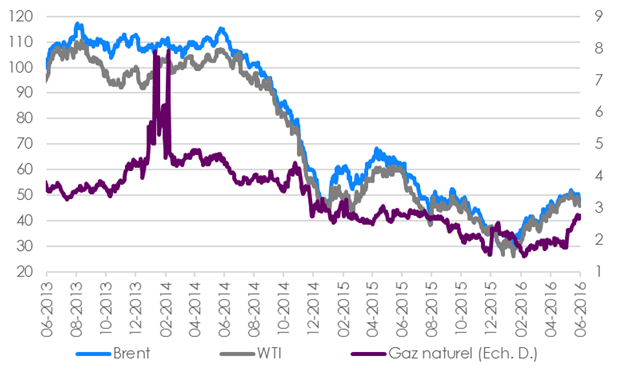
But if the heavyweights of the global economy (the triad of the United States, Japan, and the European Union) are struggling, where is global growth coming from? The answer is in the question: it is the « less » heavyweights, the emerging economies, that are the most dynamic. A quick calculation of contributions [3] to growth shows that global growth is largely based on that of emerging countries. In 2012, of the 3.2% growth in real global GDP, 2.5 points came from emerging economies and « only » 0.7 points from advanced economies (Figure 1). In other words, in 2012, 80% of the increase in global wealth was generated by emerging countries. This phenomenon is not new, but it has simply become more pronounced since the financial crisis. In the 1980s, emerging economies contributed only 36% of global growth. This figure rose to 41% in the 1990s and jumped to 70% in the 2000s. Since the crisis, it has even reached 80%.
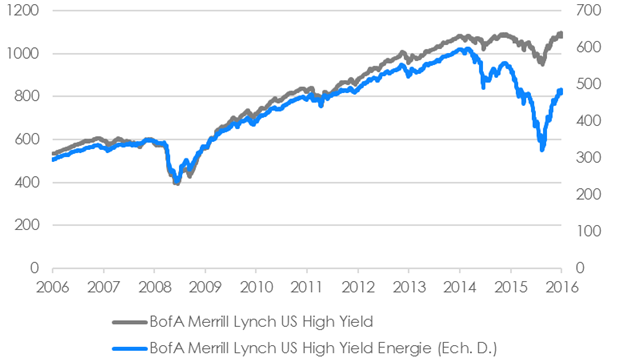
These results are hardly surprising given the difference in growth rates between the two regions. The average annual growth rate of emerging economies since 1980 has been almost 5%, while that of advanced economies has plateaued at 2.5%. In other words, based on a figure of 100 in 1980, the GDP of emerging economies reached 450 in 2012, compared with only 220 for advanced economies (Figure 2).
Figure 1:
Sources: IMF, BS-Initiative
Figure 2:
Sources: IMF, BS-Initiative
In 2013, the aggregate GDP of emerging economies will exceed that of advanced economies
This new wealth has lifted hundreds of millions of people out of poverty and has been a powerful driver of development. While development cannot be reduced to living standards (i.e., GDP per capita), it does require access to goods and services. Growth remains an essential condition for improving people’s quality of life.
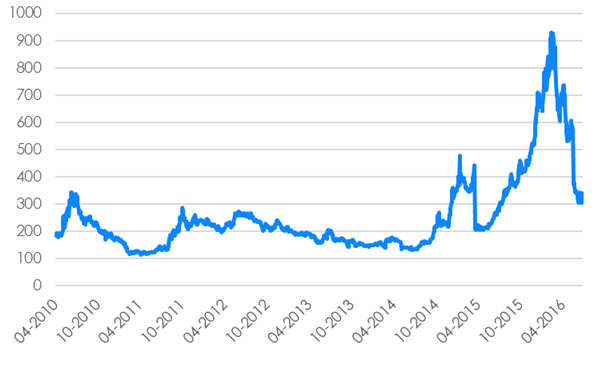
Second observation: by recording higher growth rates year after year, the economic weight of emerging countries in the global economy is trending upward. In 2013, the club of emerging countries will join that of advanced countries in terms of wealth (calculated in purchasing power parity, Figure 3). This is not insignificant: 2013 marks a turning point after nearly three centuries of Western economic domination.
We are therefore witnessing a (gradual) rebalancing of global wealth distribution. Should we be concerned? The answer is no. On the one hand, it is more of a return to the norm, i.e., to a situation that prevailed for millennia. While since the Industrial Revolution the very « select » group of industrialized countries has concentrated global wealth, China and India represented the majority of wealth before them (and for thousands of years). On the other hand, there is no reason why a minority—North America, Europe, and Japan, which represent less than 20% of the world’s population—should continue to concentrate the majority of wealth.
Graph 3:
Sources: IMF, BS-Initiative
Among emerging countries, Asia is coming out on top
Ironically, this rebalancing is taking place in a somewhat unbalanced manner. Asia is the main source of growth. Within the emerging market group, it contributed two-thirds of growth in 2012 (Figure 4). Of course, China, thanks to the combined effect of its weight and growth rate, is largely driving the region, but India (despite the economic slowdown in 2012) and ASEAN[4] are also contributing.
Conversely, smaller and/or less dynamic regions have a significantly lower impact. Emerging Europe, the Middle East, sub-Saharan Africa, and Latin America together account for only one-third of emerging market growth.
The « great rebalancing » between emerging and advanced economies does not mean exactly the same thing for a Chinese, South American, or African citizen. Let us hope that it will continue, thereby raising the standard of living of those who need it most and balancing the distribution of global wealth.
Figure 4:

Sources: IMF, BS-Initiative
Box: How can the differences in growth rates between countries be explained in 2012?
A range of structural factors help to explain the differences in growth rates between countries. First, the pace of growth remains correlated with the stage of development: the less wealthy a country is, the faster it develops (in line with economic theories of catching up). This catching up is also largely a function of the quality of infrastructure (transport/communication) and the level of education, but also of the age structure of the population and governance.
However, in addition to these structural determinants of growth, there are also more cyclical factors. For example, among the most dynamic economies in 2012 were several economies undergoing post-conflict reconstruction (Libya (1), Afghanistan (7), Côte d’Ivoire (9), Iraq (12)). There are also countries benefiting from a boom linked to the exploitation of raw materials (Sierra Leone (2), Mongolia (3), Niger (4)). Conversely, countries dependent on European demand have seen their growth slow significantly in the wake of the slowdown in the euro zone, which has affected their exports (Romania (130), Singapore (123)). In the Maghreb, economic activity has also been severely affected by political instability (Egypt (105), Algeria (101), Morocco (93), Tunisia (85)), even though the situation has improved compared to 2011.
Conclusion
The year 2013 marks a turning point in economic terms and confirms that the « world » must now rely on and work with emerging economies. But this catch-up also highlights that the geopolitical cards are being reshuffled. Long sidelined, even neglected, emerging economies now carry more weight on the global political stage. At the multilateral level, they are asserting their claims in international institutions. At the bilateral level, they are considered essential partners. For example, Nicole BRICQ, Minister of Foreign Trade, has already visited almost all of the ASEAN countries. Nevertheless, it must be noted that while the weight of emerging economies has increased considerably, they do not constitute a homogeneous club speaking with one voice. There are still many significant differences and disparities.
Notes:
[1] The list of emerging countries is that used by the IMF, available at http://www.imf.org/external/pubs/ft/weo/2013/01/weodata/weoselco.aspx?g=2200&sg=All+countries+%2f+Emerging+market+and+developing+economies
[2] Data in current USD
[3] Contributions to growth are obtained by multiplying the growth rate of the region (in this case, emerging and advanced economies) by the share of the region’s GDP (PPP) in global GDP in the previous year.
[4] Association of Southeast Asian Nations (Singapore, Indonesia, Malaysia, Thailand, Vietnam, Philippines, Cambodia, Laos, Myanmar, Brunei).