Summary:
– Teaching practices, which are exceptionally « vertical » in France, play a significant role in how society is organized, beyond that of culture.
– Excessive hierarchy in organizational structures and the substantial lack of trust that characterizes French society hinder the development of cooperation between individuals, which is beneficial to society and also conducive to the economy.
– Further developing group learning (a practice widely used in Scandinavian countries), placing greater emphasis on student well-being, and involving parents in the school process are the key recommendations put forward by the speakers.
The conference organized by the journal Regards Croisés sur l’Economie focused on the theme of « the school of tomorrow. » Speakers included Yann Algan, an economics researcher at Sciences Po, Marc Gurgand, a researcher at the CNRS and the Paris School of Economics, and Ms. Pau-Langevin, Minister Delegate for Educational Success.
The aim? To highlight the socio-psychological factors that are too often overlooked in education, yet which shape our society and the relationships we French people have with each other, within society and therefore also within companies. These factors, which may seem like mere details when we hear the current discourse on educational reform (focused on budgetary and quantitative aspects rather than qualitative ones [1]), nevertheless have significant repercussions on society and, by extension, on the economy. By way of illustration, we can see that in Scandinavian countries, trade unions have much more influence and play a much more important role than in France. The emphasis on group work, collaboration, and listening to others from kindergarten onwards in these countries, as opposed to the French education system, which is more individual-centered and makes intensive use of note-taking (the teacher talks, the students write) certainly has an impact on the way individuals communicate and organize themselves later in life (and therefore ultimately links to the previous observation [2]). The following assessment may seem rather pessimistic, but this is intentional, as the conference focused mainly on the weaknesses of our system in order to highlight areas for improvement (perhaps a rather French way of thinking, after all?). What are the problems with our education system? What can be done to improve it? This contribution reports on and extends the conference discussions, drawing in particular on the contributions of Yann Algan and Pierre Cahuc.
Mistrust and poor collaboration skills: the (partial) results of an excessively « vertical » education system?
Yann Algan began the debate by emphasizing the psychological factors of education. According to him, what particularly characterizes the French education system is the lack of reciprocity and self-esteem among students. In an article written with P. Cahuc and A. Shleifer (2011), Yann Algan studied educational practices in several countries. He divided these into « vertical » practices, where, to put it simply, « the teacher talks and the student takes notes, » and « horizontal » practices, which focus on group work. France clearly stands out in this area: the graph below shows that only Japan and Turkey have a more « vertical » system than ours.
Figure 1: Average score per country for teaching practices: « students take notes » and « students work in groups » (1=never, 2=sometimes, 3=often, 4=always)
Source: Algan et al (2011)
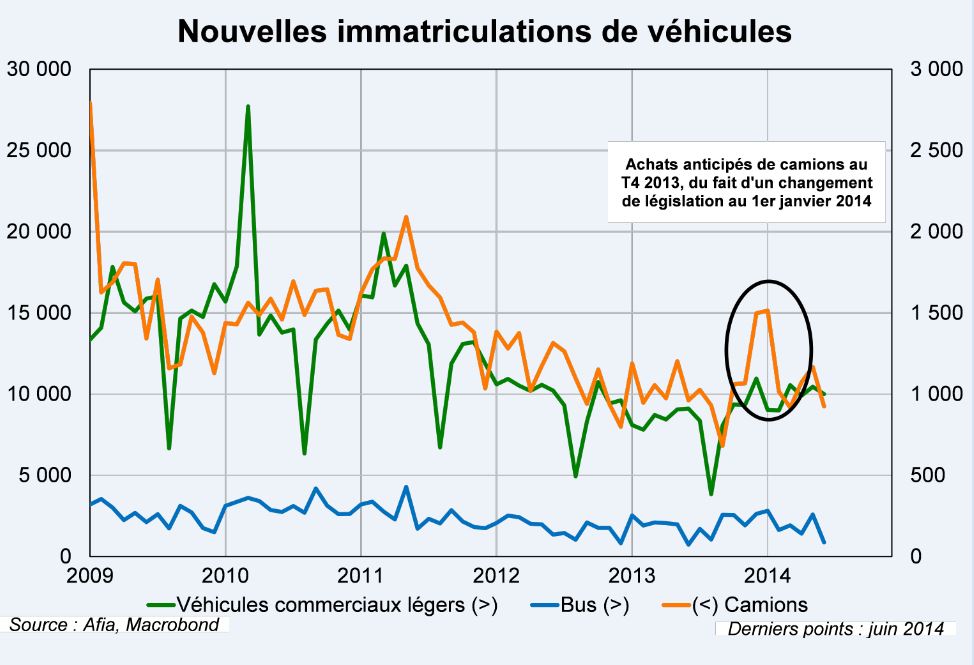
What are the repercussions? As Yann Algan points out: « if we don’t learn to cooperate at a young age, we can’t expect cooperative behavior in the workplace. » The mistrust that characterizes French society may also have some of its roots in this education system (Algan and Cahuc 2007). As Yann Algan mentions, France is characterized by a lack of trust among its citizens towards its institutions, the market, and even simply towards each other. Here more than elsewhere, it is common practice to be wary of good intentions and to « suspect one’s neighbor. » This is a reality that is quite specific to our country and is striking when compared to Scandinavian countries, for example. Twenty-one percent of French people say they trust each other, compared to more than three times that number in Sweden ( World Values Survey). Do educational practices play a role in this observation? The graph below shows the correlation between trust and the proportion of time spent on « vertical » teaching compared to « horizontal » teaching in each of the main OECD countries:
Figure 2: Trust and the gap between « vertical » and « horizontal » teaching
Source: Algan et al 2011
Algan and Cahuc (2007) argue that this mistrust is not only the result of a specific culture, but that the organization of the education system also plays a significant role [3].
The same is certainly true of the culture of hierarchy (and, by extension, the culture of deferring to « superiors ») and the use of rules and authority for even the smallest arrangements in companies or public bodies, a mode of organization often preferred to collective cooperation or simply trust [4]. A concrete example can be found in the administrative bureaucracy that characterizes our public bodies, which, according to the OECD, causes France to lose more than 3 points of growth each year [5].
Other concrete examples of the impact of culture on organizational practices can be found in everyday life. Who in France has never experienced rules that seem « absurd, » put in place solely to regulate behavior that would seem « natural » to many? Who in France has never heard of managers confusing responsibility with authority? « Dialogue » and « monologue in the presence of a subordinate »? « Collaborative decision-making » and « request for attendance for an unofficially unilateral decision »? To avoid seeing things from a single perspective, isn’t there often a certain perception of work among some people that consists of « carrying out orders from above » rather than « building something together »? Without jumping to conclusions, doesn’t the excessively « vertical » education system bear some responsibility for the trivialization of these observations? The relatively high frequency of this behavior (which is almost considered « normal » by some, perhaps leading to a vicious circle) raises the question of whether having an education system that is more focused on the individual and belief in what the teacher says, to the detriment of learning to collaborate in a group, has an influence beyond the (obvious) influence of culture, on organizational practices.
It should also be noted that mistrust, which hinders innovation in companies (particularly through the resulting vertical structures, which leave little room for individual initiative), costs France between 1 and 2% of growth each year, according to Yann Algan.
The role of well-being and parental involvement in the school process: two factors that are too often overlooked in France?
The way in which teachers exert their influence is another issue raised by Yann Algan. For him, it is clear that focusing on well-being and the development of non-cognitive skills would have a significant impact. In terms of academic success, of course, but also in terms of personal success. While it is common to hear in France that the former is a guarantee of the latter, we often forget the importance of the reverse relationship. For Yann Algan, this awareness must emerge in debates on school reforms.
Taking well-being into account and a system more focused on personal development is perhaps one of the characteristics of the Finnish system (renowned as one of the best in the world). In this country, where school only starts at the age of 7, the emphasis is placed very early on on student responsibility, and academic pressure is clearly recognized as being lower (see the Wall Street Journal article).
Marc Gurgand then emphasized the role of social experiments in education. In a recent article, « Getting parents involved: A field experiment in deprived schools, » Avvisati et al. conducted an experiment: half of the parents of middle school students were invited to attend training several times a year aimed at providing ideas for improving their involvement in their children’s education (the other half of the parents did not attend the training). Using econometric methods, they found that the number of students repeating a year or dropping out of school was one-third lower among students whose parents had attended the training than among students whose parents had not received training. The conclusion is clear: the education system must not neglect the role of parents in educational success. In economist’s terms: the « parent » input plays a very significant role in the « academic success » output.
The Minister then spoke. As her speech was clearly more political than reflective in nature, we will keep our comments on her remarks brief here. According to her, it is necessary to:
– decouple the socio-cultural level of parents from the educational success of students;
– give teachers every opportunity to « learn to teach »;
– lighten students’ school days.
The conference ended with a question and answer session. One guest’s comment stood out in particular : « It takes a village to raise a child. » Parents, teachers, administrators, children: there must be dialogue between all these stakeholders . However, as Y. Algan pointed out, the « constant mistrust » in French society poses a problem in this regard, as mistrust is not conducive to dialogue.
According to the economists who spoke, there also needs to be a collective awareness that « the well-being of students is also the responsibility of the school. » The speakers concluded by emphasizing to the Minister the difficulty of reconciling political action with fundamental reflection.
Notes:
[1] Even if, these days, questions about the content of teaching are back in the spotlight.
[2] The influence of culture is also very important, of course. The point here is not to say that education shapes social practices, but simply that it contributes to this construction. The culture of hierarchy that characterizes our society, for example, has roots that go much deeper than our simple « vertical » education (which is itself undoubtedly a reflection of this culture), as we are well aware here.
[3] Whether the education system itself is a reflection of a culture is another question not addressed here.
[4] See Algan 2012 « La fabrique de la défiance » (The Factory of Distrust) on this subject
[5] On this subject, Algan et al (2009) say that « The French people’s lack of trust hinders their ability to cooperate, which leads the state to regulate labor relations down to the smallest detail. »
References:
– Y. Algan and Pierre Cahuc (2007) « La société de défiance: comment le modèle social français s’auto-détruit » (The society of mistrust: how the French social model is destroying itself), Cepremap, Éditions de la rue d’Ulm.
– Y. Algan, P. Cahuc, A. Zylberberg: « The factory of mistrust… and how to get out of it, » Editions Albin Michel 2012.
– Y. Algan, P. Cahuc, A. Shleifer (2011): « Teaching Practices and Social Capital, » NBER Working Paper No. 17527.
– F. Avvisati, M. Gurgand, N. Guyon, E. Maurin, (2010) « Getting parents involved: A field experiment in deprived schools, » CEPR.
– F. Avvisati, M. Gurgand, N. Guyon, E. Maurin, « Communication des collèges et implication des parents d’élèves » (Communication between middle schools and parental involvement).
– Regards croisés sur l’économie, No. 12, February 2013, « School, a utopia to be rebuilt » (issue featuring Artur Jurus).
– Wall Street Journal, February 2008, « What makes Finnish kids so smart? »