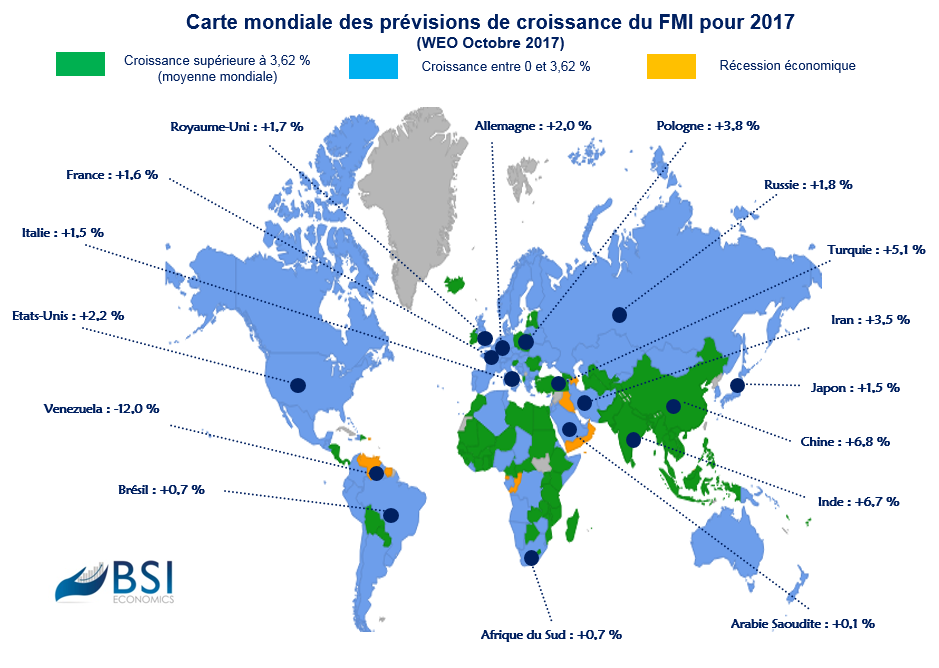
The International Monetary Fund (IMF) has updated its GDP growth forecasts for each country in its October WEO publication (see map above). While global growth is expected to increase in 2017 compared to 2016, the IMF has revised its forecasts upward overall compared to its previous WEO edition in April 2017: +3.62% global growth compared to 3.46% six months ago. Thirteen countries are expected to be in recession in 2017 (compared with twelve countries in the previous WEO in 2017), including Azerbaijan, Congo, Oman, Trinidad and Tobago, Venezuela, and Yemen.
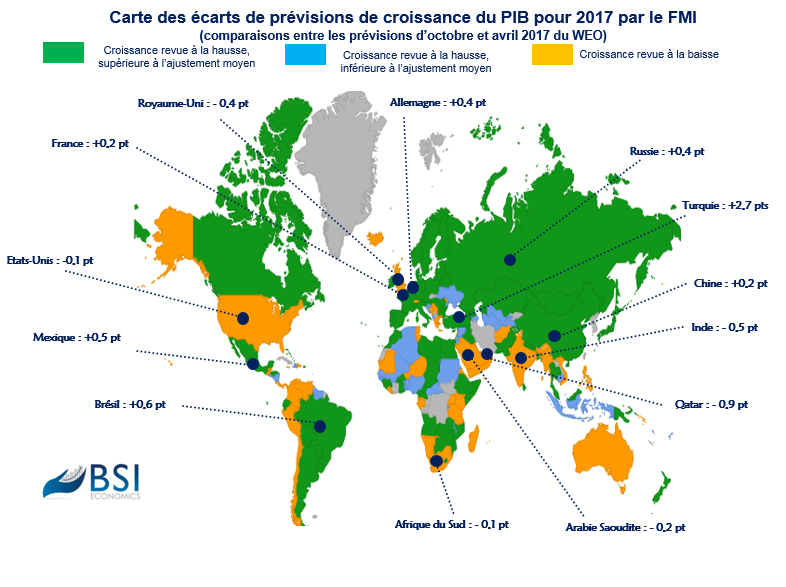
An average adjustment of +0.113 percentage points of GDP was recorded (see map above) between the October WEO results and those of April 2017. This surge of optimism on the part of the IMF can be explained in particular by the good news on the demand side in developed countries, especially in the euro area and China. The slight recovery in commodity prices and the easing of inflationary pressures, which has generally been accompanied by more accommodative monetary policies, have also contributed to an upward revision of growth in emerging countries, which have seen their exchange rates strengthen on average against the USD. Disappointment following announcements by the Trump administration that were not followed by action may partly explain the downward revision of growth forecasts in the United States. For oil-producing countries, oil prices have not risen enough to trigger upward adjustments to growth forecasts, with Qatar even coming out as the « worst performer, » due in particular to the embargo imposed on it by neighboring countries. While the outlook is improving in Brazil and Russia, the revision of Turkish growth (+2.7 pts) may come as a surprise given the profound imbalances on which its growth is based, unlike a country such as South Africa, where imbalances are weighing on the economy.
V.L.