SERIES OF MEETINGS ON THE MEANING OF MODERATION
« REGIONAL ATTRACTIVENESS: IS GOOD LIVING AN ACHIEVABLE GOAL? »
Note / Publication
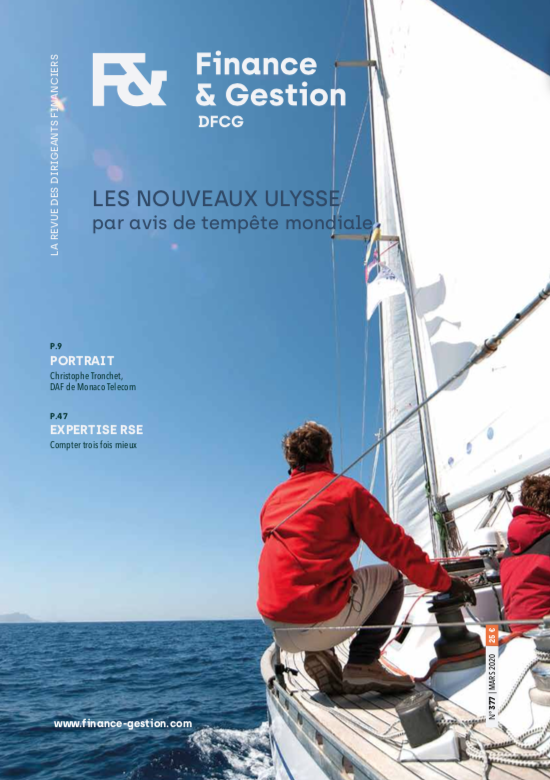
This article was published in the print edition of Finance&Gestion magazine in March 2020.
Click here to be redirected to the digital version.
The DFCG, in partnership with the Walter France network of chartered accountants and BSI Economics, organized a series of meetings this year entitled « Le sens de la mesure » (A Sense of Proportion). After Bordeaux, Nantes, and Lyon, the last stop before the Financium event in Paris was held at the Hôtel Couvent des Minimes in Lille on November 4. A final evening of debates moderated by Olivier Thenon, Vice-President of the DFCG Hauts-de-France, brought together economists, accountants, and financial directors to discuss the new challenges facing France’s attractiveness.
Anne-Sophie Alsif (economist at BSI Economics and La Fabrique de l’Industrie), Agathe Boindin (Managing Director of Log’s), Antoine Leduc ( Founder of Leduc Courtage, elected representative of the Greater Lille Chamber of Commerce and Industry and President of Places Tertiaires) and Eric Mériaux ( President of Looten and President of DFCG Hauts-de-France) took turns discussing the issues with participants to provide some answers.
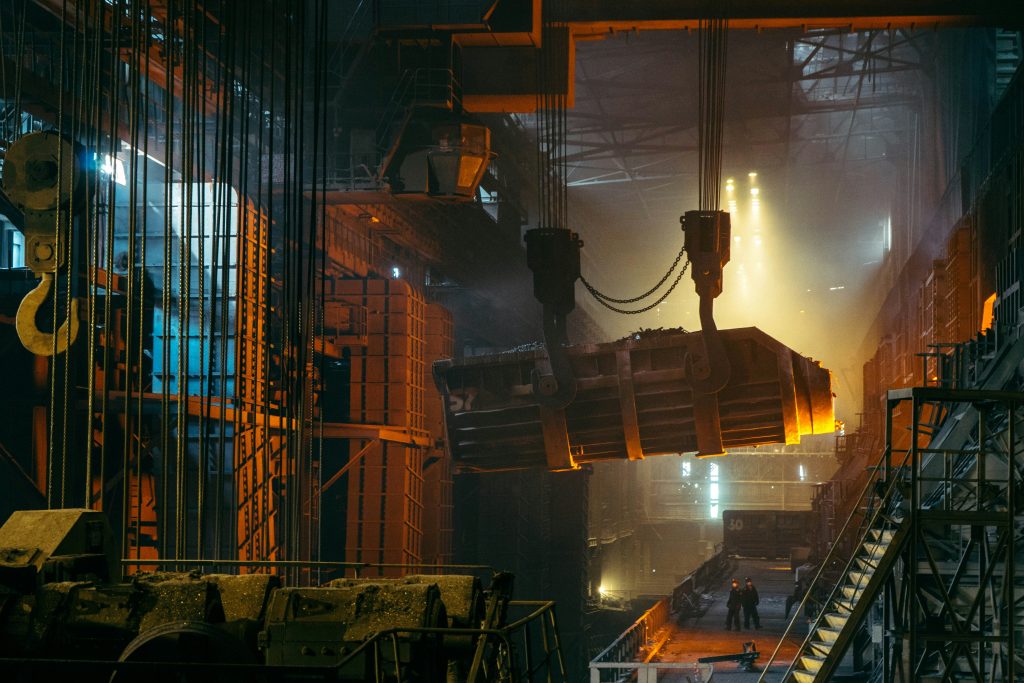
As the third largest industrial power in Europe, behind Germany and Italy, France continues to specialize in areas such as chemicals, electronics, luxury goods, transportation, metallurgy, and automotive. The process of tertiarization of the French economy began in the 1980s, following the oil crises, and aimed to gradually relocate low value-added activities to countries with low labor costs. The deindustrialization of the economy was then seen as a necessary step in the development of domestic markets and consumption, while maintaining relatively high incomes. The National Institute of Statistics and Economic Studies (INSEE) notes that, on average, since 1978, 150,000 jobs have been created each year in market services, while 60,000 have been lost in industry.
In short, the liberal policies initiated by Ronald Reagan (United States) and Margaret Thatcher (United Kingdom) encouraged the opening up of economies and the integration of emerging countries into global markets. These new entrants quickly gained market share in sectors where France remains at a mid-range level with relatively high costs. Conversely, Germany has focused on moving upmarket in sectors such as automotive, chemicals, and electronics. This global growth phenomenon has also benefited Germany, thanks to its niche market in machine tools, which is in high demand worldwide. At the regional level, the integration of Eastern European countries has facilitated the relocation of assembly activities, among others, thanks to cheap labor.
It is difficult for French industry to remain attractive in such a competitive environment. However, when we look at the contribution of the industrial sector to French gross domestic product, we see that it still far exceeds that of the R&D sector. Moreover, the Industry 4.0 wave, which promotes the robotization of the production line, appears to be a real opportunity for the French secondary sector. In addition to increased productivity, process automation creates many jobs, particularly for engineers and other operators capable of handling these new machines. « The regions that have prioritized upgrading through demanding training are also those that have been able to attract manufacturers, » says Anne-Sophie Alsif, an economist at BSI Economics and La Fabrique de l’Industrie.
At the heart of this global transformation lies the difficulty of training a workforce that is suited to the needs of today’s market. To what extent can Industry 4.0 benefit the French secondary sector? How can France restore the attractiveness of its industrial sector?
The question of optimizing regional attractiveness first requires a convergence of actions and policies among the various local players. « The sine qua non condition is to bring the worlds closer together, that is, to bring together the economy, politics, academia, and institutions, » argues Antoine Leduc, founder of Leduc Courtage. By offering both interesting career prospects and a balanced living environment, regions should be able to guarantee long-term employment for their workforce, which would limit geographical mobility. At the national level, he believes that the government has a duty to offer favorable conditions for entrepreneurship with a lenient tax system and less stringent regulations. Another fundamental point is that introducing more companies from the higher tertiary sector would diversify the range of services offered to local businesses and thus increase their attractiveness. In addition to its support for digital transformation, the higher tertiary sector is proving to be very promising, with an annual growth rate of around 4%.
For Olivier Thenon, Vice President of the DFCG Hauts-de-France, decentralization is a key issue. Despite several policies in its favor since 1982, the tertiary sector continues to be concentrated in Paris in 2019, despite the existence of high-performing training centers in the provinces. In this respect, training also appears to be an essential lever for responding to a twofold challenge: on the one hand, supporting digital transformation and, on the other, combating pockets of poverty and exclusion. Creating a strong and lasting link between higher education and the needs of the local labor market would generate momentum conducive to productivity gains.
France now benefits from a unique ecosystem that is highly conducive to research. Eric Mériaux, President of DFCG Hauts-de-France, was keen to highlight the creation of eight innovation centers supporting innovative companies, such as EuraTechnologies, a start-up incubator offering 300 companies 80,000m²of space. Nevertheless, there is still room for improvement in several areas. For Agathe Boindin, CEO of Log’s, a family-owned storage and logistics group, it is essential to reduce the dichotomy between practical and theoretical innovation. Better support for SMEs in R&D through more precise segmentation within the company would encourage investment in this area. More than just a productivity gain, innovation appears to be a necessity for companies, according to Antoine Leduc: « A company that does not innovate in 2019 is a company that will be doomed within the next five years. »
Marine Coinon. Executive Director/Economist, BSI Economics
Caroline Perrin. Head of Communications, BSI Economics
Photo credits: Finance&Gestion, DFCG (March 2020)