DISCLAIMER: The opinions expressed by the author are personal and do not reflect those of the institution that employs him.
Usefulness of the article: This paper analyzes the different types of financial risks resulting from climate change. Two major risks, physical risks and transition risks, are likely to lead to unprecedented structural change in our economies if we are to meet international commitments, particularly the Paris Agreement. These changes could have a significant impact on economies and the financial sector depending on the path chosen for the transition, calling for a greater role for private actors as well as central banks.
Summary :
- Five years after the Paris Agreement, and with the United States now back on board, limiting the temperature increase to 2°C will entail both physical and transition risks related to climate change.
- These risks could have a significant impact on our economies and financial stability, through a decline in asset values—particularly real estate—but also through the transition of our societies to a low-carbon economy.
- This transition will lead to a structural change in our economies towards a so-called « green » economy, rooted in the expected reallocation of investments.
- As a result, policymakers and regulators, as well as international organizations, are stepping up their efforts to initiate this transition, which is expected to accelerate rapidly. Central banks in particular could play an increasingly important role in this transition, given their significant role in the allocation of resources.


As we celebrate the fifth anniversary of the Paris Climate Agreement, in which signatory states commit to « hold the increase in global temperature well below 2°C above pre-industrial levels and pursue efforts to limit the temperature increase to 1.5°C, » it is becoming increasingly important to take into account the risks associated with climate change on the economy and the financial sector.
Indeed, the effects are already being felt: according to the Intergovernmental Panel on Climate Change, temperatures are now already at least 1°C higher than pre-industrial levels. According to the IPCC, if the current trend continues, temperatures will likely rise by 1.5°C before 2050, with both physical and behavioral consequences. Nature even indicates that the inertia of GHGs already present in the atmosphere will lead to a minimum increase of 2.3°C[3].
This paper will focus on climate issues, namely the transition and physical risks directly linked to climate change—such as damage caused by extreme weather events or a decline in the value of assets in carbon-intensive sectors—rather than « peripheral » risks, indirectly linked to climate change, such as the risks associated with expected population movements in certain regions of the world.
So what are the risks, primarily financial but also economic, of reallocating resources or significantly changing consumer behavior in order to limit global warming?
To answer this question, we will first analyze the unique scope and characteristics of climate change risks in order to gain a deeper understanding of the resulting financial and economic risks.
1) Climate change: a unique structural change
1.A) Climate change brings two specific risks that will lead to structural change in our economies
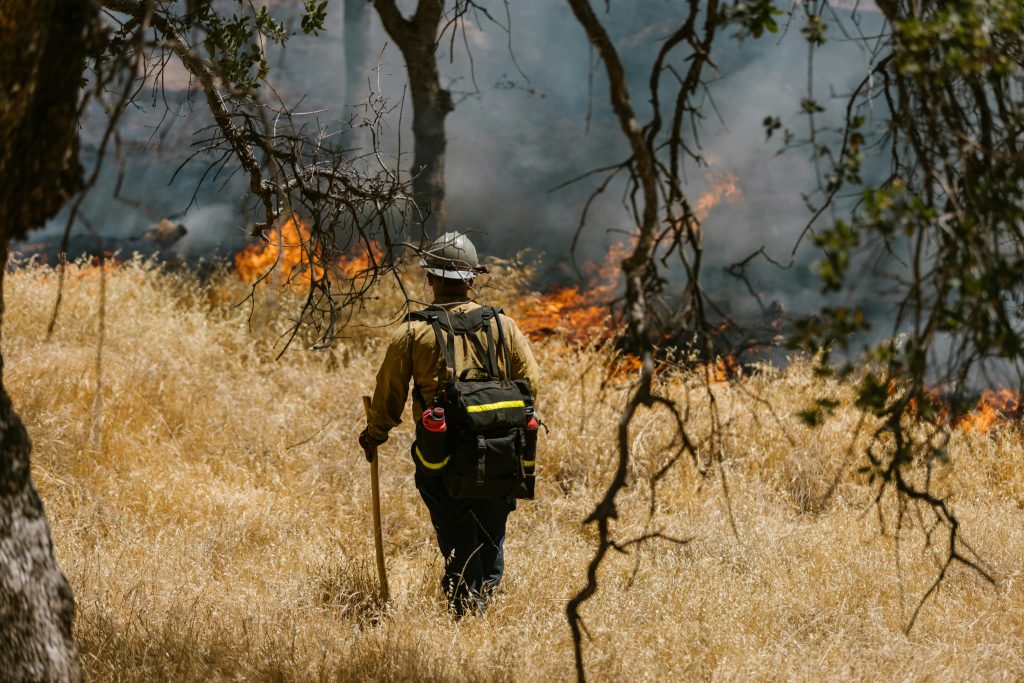
There are two main risks, identified by the Network for Greening the Financial System (NGFS)[4], among others: physical risks and transition risks. Physical impacts include the economic costs and financial losses that result directly from the increased severity and frequency of extreme weather events. These weather changes are directly linked to climate change, such as heat waves, floods, but also fires, storms, etc. Physical impacts also include impacts due to gradual long-term changes in the climate, such as precipitation or ocean acidification. These are already affecting all land- and sea-related sectors, such as real estate, agriculture, and fishing. In Miami, for example, rising water levels have already led to a shift in real estate prices towards higher-lying neighborhoods, previously reserved for low-income workers. Recent late frosts in the wine sector, which are expected to reduce the harvest by 90% in some areas (Beaujolais and Bordeaux, for example), illustrate this physical risk.
There are also transition risks associated with the process of adjusting to a low-carbon economy. According to the IPCC and the terms of the Paris Agreement, emissions should peak as quickly as possible in order to meet commitments. This process of peaking and then reducing emissions is expected to follow regulatory effects and the introduction of an incentive carbon tax. This scenario will have a significant impact on all sectors of the economy by affecting the value of financial assets and leading to changes in citizen behavior. The speed and organization of this transition is therefore likely to have a major impact on economies in the near future. The scale of the risks associated with climate change is unprecedented.
1.B) The scope of this structural change is unique in its scope
The structural change in our economies depends in particular on the characteristics of climate change. According to the NGFS, there are four such characteristics. First, the extent of climate change is considerable: climate change will affect all economic agents, from households to businesses and public administrations, across the globe. The risks are likely to be correlated with tipping points. This concept oftipping points gives the phenomenon a systemic character, meaning that once a certain limit is exceeded—in terms of emissions, ice melt, or temperature, for example—the snowball effect is such that it changes the entire planet.
Furthermore, the risks associated with climate change are characterized by their predictability and irreversibility. While the effects, time frame, and future trajectory of climate change are by definition uncertain, its future materialization is highly probable. Furthermore, according to the IPCC, scientists have demonstrated with a high degree of confidence that beyond a certain threshold, climate change will have irreversible consequences for our planet.
Finally, the last characteristic is the dependence of climate change on short-term actions: the scale and nature of future impacts will be determined by the actions taken today, which must therefore be part of long-term policies, as set out in the Katowice Rules[8] enacted by COP 24.
Thus, these two risks arising from climate change are likely to lead to significant structural change that could affect our economies and financial sector.
1.C) This structural change would result from a massive reallocation of investments
The strongest impacts are expected to be on the reallocation of corporate investments, which would lead to structural change.
With the United States back in the Paris Agreement, the likelihood of achieving the main commitment, namely to limit the rise in global average temperatures to +2°C above pre-industrial levels and to pursue efforts to limit the increase to +1.5°C, is increasing. The transition to an economy that can meet this commitment will entail a major economic transformation and presents both risks and opportunities for the economy and the financial system. The IPCC estimates that investments in the energy sector between now and 2050 will total more than €800 billion per year. At the EU level, the European Commission has identified a financing need of €180 billion per year if it is to achieve these climate goals.
The reallocation of capital to green finance will therefore become paramount, and could reach USD 620 to 720 billion by 2035 in terms of annual bond issues and between USD 4,700 and 5,600 billion in terms of outstanding securities. This shift in investment would lead to significant structural changes in the economy compared to today, and some studies have sought to quantify the impacts of such a transition. Synthesizing the results of 31 models, the IPCC concluded that the costs of limiting global warming to 2°C would be between 1% and 4% of aggregate global consumption by 2030 compared to current economic forecasts. Thus, economic and financial risks are linked, as illustrated below.
At the household level, studies are less clear about the exact impacts, but consumer attitudes are also leading to a distortion in consumption. However, one example can be illustrated by organic farming in France. The growth of so-called « green » sectors is significant. For example, the organic sector is booming and growing: in France, in 2005, 2% of cultivated land was used for organic production. Today, organic farming accounts for around 8% of usable agricultural land, and the trend is accelerating[13].

2) Climate change as a source of systemic risk for economic and financial stability
This topic has been explored by economists at BSI Economics, and this article refers to articles by Charlotte Gardes (Climate change, a systemic challenge for the financial system[14]; and What role does monetary policy play in the fight against climate change?[15])
2.A) Physical impacts may affect valuations in certain sectors
Physical impacts relate to extreme weather events that affect health and cause « physical » damage to property and infrastructure, particularly real estate. According to the NGFS, these events could reduce wealth and productivity, which would affect economic activity. Indeed, these events could divert capital away from more productive uses, such as innovation, towards reconstruction and replacement activities, which are often costly. The study by reinsurer Munich Re, illustrated below in Figure 1, shows the significant costs incurred by hurricanes affecting the US and Caribbean coasts.
Table 1 – Economic damage caused by hurricanes in the Caribbean between 1980 and 2019, in billions of USD

Uncertainty about these future losses could also reduce precautionary savings and investment. The physical impacts have already begun. According to Munich Re[16], the economic costs of natural disasters have exceeded their 30-year average by USD 140 billion in seven of the last ten years. Since the 1980s, the number of extreme events has tripled. This finding coincides with that of the IPCC, which highlights the significant risks to food security, water resources, and the habitability of certain regions if the 2°C threshold is exceeded [17].
The consequences could be major. According to Nature, global average incomes could fall by a quarter by the end of the century[18]. In terms of financial stability, some economists show that value at risk(VaR), representing losses, could be as high as 17% depending on the rise in temperatures. These effects are mainly felt through a decrease in the value of assets, particularly real estate and property. The transmission channels for financial stability are illustrated below.
These asset depreciations call for in-depth work, particularly by central banks, to monitor and measure their impact on financial stability.
2.B) Towards a new approach by regulators and governments
It therefore seems important to act more quickly, especially since, according to Porter’s hypothesis[21], the cost of climate transition is much lower than the cost of inaction, primarily due to economies of scale and increased productivity resulting from massive investment. At the same time, the cost of inaction remains significant. In some studies, estimates of losses are substantial, ranging from $1 trillion to $4 trillion for the energy sector alone, and up to $20 trillion for the economy as a whole, or nearly 10 times France’s GDP, by 2050[22]. Beyond a governmental approach, action is now increasingly being taken by private actors as well as central banks.
While the G7 in 2019 mandated the UNDP and the OECD to move forward on aligning finance with sustainable development, and the European Commission is working on a taxonomy for sustainable finance and activities, climate change is becoming increasingly prominent in recent political actions and among an increasingly broad audience.
The debate on the role of central banks is now coming to the fore. As mentioned above, climate change could affect financial stability. Inflation and its stability could be affected, particularly in terms of food in the event of changes in harvests, but also in terms of energy in the event of natural disasters, or even oil. Beyond the NGFS, a working group composed of central banks, ECB President Christine Lagarde recently announced the creation of a working group on this subject, which signals a political will at the dawn of the ECB’s major strategic review. The Banque de France also announced, on the occasion of the publication of its report on responsible investment, the establishment of a climate change center in early April 2021 to steer its initiatives.
Thus, while central banks’ balance sheets continue to grow in response to the injection of liquidity due to the pandemic, upcoming deadlines could change the approach of regulators. The French regulator, the Autorité de contrôle prudentiel et de résolution (ACPR), is conducting climate stress tests as preliminary work for the European Banking Authority (EBA) stress tests scheduled for next year, the results of which are expected in the first half of this year. These stress tests have a dual objective: firstly, methodological, in order to develop quantitative methods on climate issues and in the long term, but also preventive, in order to measure the resilience of financial institutions according to the ecological transition scenarios selected.
But while the ECB’s statutes leave sufficient leeway to use monetary policy as a lever in the fight against climate change, the contradiction with the objective of « market neutrality » still needs to be redefined and countered, according to Benoît Coeuré, former member of the ECB’s Executive Board and now head of the Bank for International Settlements (BIS). This is the idea that monetary intervention must finance the economy as it is, without seeking to change its structures, even on the basis of climate criteria. However, although the Treaty on the Functioning of the European Union makes maintaining price stability the primary objective of the European System of Central Banks (ESCB), the text also states that « without prejudice to [this] objective… the Union « shall work for (…) a highly competitive social market economy, aiming at full employment and social progress, and a high level of protection and improvement of the quality of the environment. »
Thus, depending on how the treaty is interpreted, the ECB may become a regulator in terms of improving the « quality of the environment. » This would be a major step forward in financial terms. If the assets eligible for the ECB’s private purchase programs, such as the CSPP, include ESG criteria, companies exposed to climate change would find it more difficult to borrow, which would accelerate the reallocation of investments described above. But at a time when climate scenarios are becoming increasingly pessimistic, the willingness of central banks to accelerate this process would send a strong political signal.
Conclusion
In a famous speech in 2015, former Bank of England Governor Mark Carney referred to the » tragedy of the horizon » in relation to the climate threat. This refers to catastrophic collective risks that are likely to materialize well beyond the horizon of current economic and political decision-makers. As the horizon approaches, and studies show that the impact of climate change on our economies and the financial sector could transform our societies due to its scale and irreversibility, action is mounting.
With the ECB’s major strategic review due to be published and the debate on debt cancellation due to the pandemic raging, the debate continues over the role of regulators and central banks in the face of climate change. Indeed, as the balance sheets of central banks, particularly the ECB, grow, the exclusion of certain assets, especially those exposed to climate change such as « brown » assets—primarily oil and coal—would significantly alter the allocation of resources in our economies, as well as their valuation.
However, there is a contradiction: while European treaties mandate the ECB to combat global warming, market neutrality limits its scope. It will therefore be up to the ECB’s management to convince European politicians to more clearly enshrine the ECB’s role in combating climate change in its mandate if it wants to match its words with its actions. This remains an eminently political issue, one that central banks are no longer accustomed to addressing since their move towards « independence » in the 20th century.
Sources:
The Paris Agreement:https://unfccc.int/sites/default/files/french_paris_agreement.pdf
IPCC:
- https://www.ipcc.ch/site/assets/uploads/sites/2/2019/09/IPCC-Special-Report-1.5-SPM_fr.pdf
- https://www.ipcc.ch/site/assets/uploads/sites/2/2019/09/SR15_Summary_Volume_french.pdf
NGFS:
Impacts of climate change:
- Burke, Hsiang, and Miguel, « Global Non-Linear Effect of Temperature on Economic Production, » Nature, vol. 527, pp. 235-239 (November 12, 2015).
- https://unfccc.int/process-and-meetings/the-paris-agreement/paris-agreement-work-programme/katowice-climate-package
- https://www.munichre.com/topics-online/en/climate-change-and-natural-disasters/natural-disasters.html
- IEA (International Energy Agency) and IRENA (International Renewable Energy Agency), perspectives for the Energy Transition
- https://ec.europa.eu/clima/policies/international/negotiations/paris_fr
Porter’s hypothesis: Porter and van der Linde, « Toward a New Conception of the Environment-Competitiveness Relationship, » Journal of Economic Perspectives, Vol. 9 (4): pp. 97-118, 1995
https://www.nature.com/articles/s41558-020-00955-x
G7 UNDP OECD mandate: https://www.undp.org/content/undp/en/home/news-centre/news/2020/OECD_UNDP_Framework_SDG_Aligned_Finance.html
BSI Economics:
http://www.bsi-economics.org/892-changement-climat-systemique-enjeu-finance-cg
http://www.bsi-economics.org/950-role-politique-monetaire-lutte-changement-climatique-cg
Organic farming in France:
[7] https://www.carbonbrief.org/explainer-nine-tipping-points-that-could-be-triggered-by-climate-change
[8] https://unfccc.int/process-and-meetings/the-paris-agreement/paris-agreement-work-programme/katowice-climate-package
[9] IPCC, Global Warming of 1.5 °C, Summary for Policymakers, 2018
[11] Defined by the G20 GFSG as « the financing of investments that deliver climate and environmental benefits in the broader context of environmentally sustainable development. »
[12] https://www.oecd.org/env/mobilising-bond-markets-for-a-low-carbon-transition-9789264272323-en.htm
[13] https://fr.statista.com/infographie/20912/chiffres-cles-evolution-bio-agriculture-biologique-en-france/
[16] https://www.munichre.com/topics-online/en/climate-change-and-natural-disasters/natural-disasters.html
[18] Burke, Hsiang, and Miguel, « Global Non-Linear Effect of Temperature on Economic Production, » Nature, vol. 527, pp. 235-239 (November 12, 2015).
[19] VaR measures market risk from a financial perspective. It corresponds to the amount of losses that should only be exceeded with a given probability over a given time horizon.
[20] Dietz, Bowen, Dixon, and Gradwell, « Climate value at risk of global financial assets, » Nature Climate
Change, 2016
[21]Porter and van der Linde, « Toward a New Conception of the Environment-Competitiveness Relationship, » Journal of Economic Perspectives, Vol. 9 (4): pp. 97-118, 1995
[22] IEA (International Energy Agency) and IRENA (International Renewable Energy Agency), Perspectives for the Energy Transition
[23] https://www.undp.org/content/undp/en/home/news-centre/news/2020/OECD_UNDP_Framework_SDG_Aligned_Finance.html