Summary:
– Although there are different definitions and approaches to measuring poverty, this phenomenon is multidimensional and remains difficult to quantify.
– The complexity lies in describing the characteristics of this phenomenon: poverty as a lack of monetary resources, a deficit in education and health, or the absence of freedom, the inability to participate in a community, or the lack of a sense of belonging to a given society.
– Poverty, inequality, and injustice are structural problems rooted mainly in the societies of developing countries. The fight against poverty has become a priority and one of the main Millennium Development Goals for a « more peaceful, prosperous, and just world. »
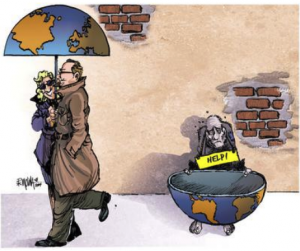
Poverty can manifest itself in many ways: through low or no income, poor housing, poor health, inadequate education, malnutrition, or a degraded environment. These factors vary from one region to another and from one group of people to another, which makes it difficult to quantify the phenomenon, but it is clear that poverty is multidimensional.
All international organizations now agree that poverty should not be reduced to its monetary expression, in other words, poverty expressed in terms of insufficient economic resources to live decently.
Poverty is not a universal condition; its definition is based on the various characteristics that comprise it. In this context, and in order to better understand this phenomenon, we will present the views of two international institutions on the definition of poverty, as well as a number of ideas developed on the subject by economists in the literature. Finally, we will present the different conceptual approaches to poverty.
1 – Definitions of poverty according to the UNDP and the World Bank
For the World Bank and the UNDP, poverty resultsfrom« a lack of (access to) assets, insufficient or inappropriate economic growth, and poor governance. »
The World Bank and the UNDP (United Nations Development Programme) remain the two leading institutions in the fight against poverty. The two organizations agree on the causes of poverty but differ on its definition and quantification.
The UNDP specifically defines three concepts:
Extreme poverty or absolute poverty:a person lives in extreme poverty if they do not have the income necessary to meet their basic food needs, defined on the basis of minimum caloric requirements (1,800 calories per day per person (WHO)).
General poverty or relative poverty:a person lives in general poverty if they do not have sufficient income to meet their essential non-food needs: clothing, energy, housing, and food.
Human poverty:considered to be the absence of basic human capabilities: illiteracy, malnutrition, reduced longevity, poor maternal health, preventable disease.
The UNDP does not officially define monetary poverty, but it does refer to it. Human poverty is at the heart of the analysis and is linked to the concept of human development inspired by the workof Amartya Sen ( Nobel Prize in Economics – 1998): human development represents the expansion of opportunities and choices available to individuals.
The UNDP therefore favors a multidimensional approach in which human poverty is defined as « the denial of the fundamental opportunities and prospects on which all human development is based: living a long, healthy, constructive life and enjoying a decent standard of living, as well as freedom, dignity, and respect for oneself and others. ( UNDP-Algeria Human Development Report 2006, p.17)
The World Bank’s approach to poverty is monetary. Its reasoning is based on identifying two types of poverty: absolute poverty and relative poverty, as defined above.
The World Bank recognizes the different facets of poverty: its multiple dimensions are therefore not overlooked. It explains that the study of areas such as health, education, vulnerability, lack of power, and lack of voice are particularly necessary to understand poverty in all its complexity.
The World Bank’s monetary approach consists of » using income or consumption criteria, then combining different areas that reinforce or aggravate each other to reduce or increase the level of poverty among poor populations. »
2 – Poverty: A brief review ofthe literature
Even in the 21st century, the analysis of multidimensional poverty remains a concept that is difficult to identify and measure. Issues relating to the measurement of poverty are the subject of debate, with questions of relevance in targeting populations and the choice of economic policies to combat poverty and inequality at the heart of current events. The objective remains to target and identify poor households.
Many economists have addressed this issue, but a common consensus has never been reached. Often very close to certain economic realities, the theories of Sen (1998 Nobel Prize in Economics), Ravallion (Chief Economist and Vice President of the World Bank Group), and Rawls (American philosopher) have paved the way for a better definition of the subject, no doubt in the very near future.
Historically, in the 1890s, social Darwinism[1] defined povertyas « a phenomenon that responds to so-called scientific laws that must be measured and analyzed. » Seebohm Rowntree[2] devoted part of his life to analyzing monetary resources to measure nutritional, clothing, and housing needs, which led to lengthy debates and analyses over time on this phenomenon.
Welfare theory[3] , which has been dominant for two centuries, bases well-being exclusively on the notion of utility, where monetary resources (or income) determine its level. Poverty is thus defined as « a socially unacceptable level of income. »
Peter Townsend[4]undertook a relativist approach to poverty in the 1970s. For him,« individuals, families, or groups of the population can be considered to be in a state of poverty when they lack the resources necessary to obtain the standard diet, participate in activities, and have the living conditions and amenities that are usually or at least widely encouraged or approved in the societies to which they belong. Their resources are so significantly below those determined by the individual or family average that they are, in fact, excluded from common lifestyles, habits, and activities. »
In his book A Theory of Justice ( 1971) , John Rawlsprovides a philosophical definition of poverty based on what he considers to be primary goods, i.e., basic rights and freedom of choice. Poverty is defined as a situation considered unacceptable, i.e., unfair, in a given society, both economically and socially. Unlike welfarists, only justice or equity is the basis of social arrangement.
According to Amartya Sen and his work on multidimensional poverty, the definition of this phenomenon is based on two approaches, one of which is called the one-dimensional approach. This approach is applied by donors and international institutions to identify poor populations, but its criteria are limited because they focus on monetary resources, i.e., income and consumption. According to Sen, these criteria for measuring poverty are insufficient and do not fully address the problem of targeting poor populations. Sen’s second approach is the multidimensional « capabilities » approach (see different approaches to poverty), in which he considers that poverty must take into account « well-being » factors. Sen explains through his analyses that poverty should not be considered solely as a lack of monetary resources, but that people’s physical condition and personal achievements should also be taken into account. His statement that « the value of living standards has everything to do with life, not with the possession of goods » perfectly sums up this idea.
Martin Ravallion analyzes poverty through resources, more specifically through « satisfaction » with resources. In his work « Comparisons of Poverty » ( 1996), he defines poverty in asociety as « when the well-being of one or more people does not reach a level considered reasonable according to the criteria of that society. »
The complexity in defining poverty lies in describing the characteristics of this phenomenon: poverty as a lack of monetary resources, a deficit in education and health, or the absence of freedom, the inability to participate in a community, or the lack of a sense of belonging to a given society. What is something that a person absolutely must not lack? This question calls for the broader notion of equity, which complicates the conceptualization of poverty. Poverty is therefore not a universal condition; its definition varies according to these characteristics and social norms, which are addressed differently by different authors.
3 – Different approaches to poverty
In the literature, there are two main approaches to poverty, which are detailed below:
– The monetary approach supported by utilitarians or welfarists
– Non-monetary approaches
3.1 – The monetary or income approach
According to this approach, well-being results from insufficient monetary resources, which leads to insufficient consumption. It is based either on income or on consumption translated into monetary value. This approach is dominant and most widely used by international institutions, particularly the World Bank.
Welfare theory is the benchmark for analyzing monetary poverty. Welfarists refer either to economic welfare directly linked to the concept of economic utility[5] or indirectly as the utility generated by total consumption. In practice, economic well-being cannot be quantified directly because economic agents have preferences[6] , so the monetary approach to poverty relies on the use of income or consumption as a measure of welfare.
Two key principles emerge from this approach: individuals are the only ones who know what is in their best interests, so they have different preferences, and the state must limit its interventions in the economy, focusing on policies that reduce poverty but are based on increasing productivity and, consequently, income.
3.2 – Non-monetary approaches
Unlike utilitarian approaches, non-monetary approaches are based on the definition of well-being from a social perspective. Well-being is not translated in terms of monetary resources, but in terms of freedoms and achievements.
3.2.1 – The basic needs approach:
This approach focuses on identifying the needs common to all human beings that are necessary to achieve a certain quality of life. These needs are basic needs such as education, health, hygiene, sanitation, drinking water, and housing. A person is considered poor when they cannot meet their basic needs in relation to a certain standard of living. One of the drawbacks of this approach is the very definition of basic needs, which, like poverty, remains somewhat relative.
3.2.2 – The cumulative deprivation approach, a multidimensional approach :
This method involves analyzing a homogeneous source, such as one-off household surveys, to identify individuals who are simultaneously deprived of certain goods and services necessary to ensure a « normal » standard of living. Following these surveys , a relative « score » is constructed for each statistical unit based on these deprivations. The poor are those who experience a number of recurring and fixed deprivations. The disadvantage of this approach lies in defining these necessary goods and services and setting a minimum score.
3.2.3 – The capabilities approach:
Led by Amartya Sen (1987): This approach is based on the concept of « social justice. » Here, what is lacking is not utility or basic needs, but the human abilities or capabilities deemed fundamental to achieving a certain standard of living. Well-being is not about owning goods, but about being well-fed, well-educated, in good health, participating in community life, etc. This set of factors determines the value of life. Sen indicates that the value of an individual’s life depends on a set of ways of doing and being that he groups under the term « functionings. »
An individual’s capabilities are determined by their potential, which corresponds to their endowment of social capital, human capital, physical capital, and economic capital (Rousseau, 2001), as well as by their opportunities, which are conditioned by the individual’s specific environment, which will determine their possible choices, i.e., their constraints on functioning.
Functionings are accomplishments, while capabilities describe the freedom to choose among different functionings. A poor person is someone who lacks the capabilities to achieve a certain subset of functionings. Ultimately, poverty is therefore the deprivation of this functionality.
3.2.4 – Other approaches:
- Subjective poverty: Thisconsists of assessing the perceptions of households that have been surveyed and who answer questions about their situation. For example: being able to save, or having to use these reserves, or having the minimum amount necessary to « make ends meet. » This approach makes it possible to identify the needs that households consider necessary and those that, in their opinion, are a sign of poverty. This approach has disadvantages because the questions asked must be appropriate to the context.
- Transitional/structural poverty: This involves distinguishing between permanent poverty due to the very structure of society and transitional poverty resulting from unfavorable economic conditions. This approach is rarely used because it requires extensive monitoring, but it is important because it would allow policies and programs to combat poverty to be modified according to whether it is structural or cyclical in nature.
- The snapshot/life cycle approach:This approach distinguishes between « permanent » poor people and « transitional » poor people who make sacrifices during a cycle of their lives in the hope of a higher income in the long term.
Conclusion
Poverty remains difficult to eradicate, so what should be done to reduce it? Authors offer a wide range of possible solutions, such as exploiting opportunities for growth and employment in rural areas outside agriculture and improving the overall environment through productive investments in education, health, and training. Abdelkhalek Touhami devotes considerable thought to the instruments that should be implemented to reduce poverty, and he believes that the development and financing of micro and small enterprises is one of the most effective instruments.
The fight against poverty has become a priority and one of the main Millennium Development Goals adopted in the 2000s at the United Nations headquarters. The eight MDGs, as defined, were established to create « a more peaceful, prosperous, and just world. »
The MDGs comprise eight goals to be achieved by 2015, which are as follows: reduce extreme poverty and hunger, achieve universal primary education, promote gender equality and empower women, reduce child mortality, improve maternal health, combat HIV/AIDS, malaria and other diseases, ensure environmental sustainability, and develop a global partnership for development.
These goals must be achieved by 2015 while respecting certain fundamental values such as freedom, equality, solidarity, tolerance, respect for nature, and shared responsibility. According to the 2014 Millennium Development Goals Report, remarkable progress has been made in reducing extreme poverty. In 1990, nearly half of the population in developing regions had less than $1.25 per day. This rate fell to 22% by the end of 2010. With these figures, the MDG target of halving the proportion of people living in extreme poverty was achieved five years ahead of the 2015 deadline.
Between 1990 and 2010, the total number of people living in extreme poverty fell from 1.9 billion to 1.2 billion. However, progress has been uneven across different regions of the world. The 2014 report notesthat « East Asia, Southeast Asia, Latin America and the Caribbean, the Caucasus, and Central Asia have achieved the target of halving the extreme poverty rate, while sub-Saharan Africa and South Asia are still lagging behind. According to World Bank projections, it is unlikely that sub-Saharan Africa will reach the target by 2015. »
References
– » Millennium Development Goals, » United Nations, 2014
– « National Strategic Framework for Poverty Reduction in Morocco: On the Concept of Poverty and Analysis of the Situation, » Touhami Abdelkhalek, September 2009.
– « Comparing Poverty: Concepts and Methods,« Working Paper No. 122, Martin Ravallion, February 1996.
– « Poverty according to the UNDP and the World Bank, » Emmanuelle Benicourt, Rural Studies, 2001.
– » Human Development Report, « United Nations Development Program, 2000/2011/2013/2014.
– « What ‘measures’ should be used to quantify poverty? Indicators produced by international organizations, » Benoît Martin, CERISCOPE Poverty, 2012.
– « Amartya Sen: A Development Economist?« , Agence Française de Développement Research Department, AFD 2008.
– « Trade, growth, poverty, and inequality in developing countries: a review of the literature, »Jean-Pierre Cling, http://www.dial.prd.fr
– « How to define poverty: Ravaillion, Sen or Rawls? »,BISIAUX Raphaëlle (OECD Consultant), L’Economie politiqueNo. 049 – January 2011
– « Measuring Poverty: A Conceptual Framework, »Canadian Center for Studies and International Cooperation (CECI), L. Asselin – A. Dauphin, 2000;
Notes:
[1] Social Darwinism:refers to the application of the theory of natural selection, in principle reserved for the animal world, but also to human society.
[2] Seebohm Rowntree:19th-century sociologist known for his various works on primary and secondary poverty.
[3] Welfarism:a school of thought that defines social welfare exclusively in terms of utility functions, i.e., the satisfaction of preferences, and advocates the role of the welfare state. It developed as a strictly economic view of the best social arrangement, dominated by two concepts: growth and efficiency (« Measuring poverty: a conceptual framework, » Asselin, Dauphin (2000)).
[4] Peter Townsend: English sociologist and former professor of International Social Policy at the London School of Economics.
[5] Utility:According to neoclassical economic theory, a totally rational economic agent has the financial objective of maximizing his utility, i.e., his immediate or potential « enjoyment. »
[6 Preferences: A rational economic agent seeks to maximize his satisfaction, which is the expression of his preferences (different choices), depending on the constraints he faces.